Monday Map Out - 12/22/2025

It may surprise you to find this out, but I was a bit of a geek in school. Yes, aside from the whole “new game developer” thing I also played Magic (I tapped out during Alliances because I was a broke college kid) and was in band. The eight years I spent from seventh grade to my sophomore year in college, playing trombone and then marching baritone, taught me a little sight-reading and the fundamentals of the bass clef. I wasn’t a music major, so I didn’t have any real need to delve into music theory. When was I ever going to actually make music?
“LOL,” as the Internet says today, “LMAO, even.”
A good game needs music, preferably good music. Where would The Legend of Zelda be if Nintendo didn’t have an eleventh-hour realization that Ravel’s Boléro was just this shy of being out of copyright protection? What about Undertale and Toby Fox’s continuous iterations of “Megalovania”? I’m not even in the same area code as Koji Kondo or Toby Fox, but I want to make Just Beneath the Holler a good game, so I have to learn how to make good music.
How I Approach Research
I’m still old-school, paper-and-pencil. I’ve just started using Trello to keep my game development work organized but, for actual learning, I research, read (and type, now), reflect, and write. I knew I needed a program to make music, so I hit YouTube and Google and learned what a DAW was and how instruments could be added to them. FL Studio kept popping up, so I downloaded it, opened it, and partially dissociated as I stared at the interface:
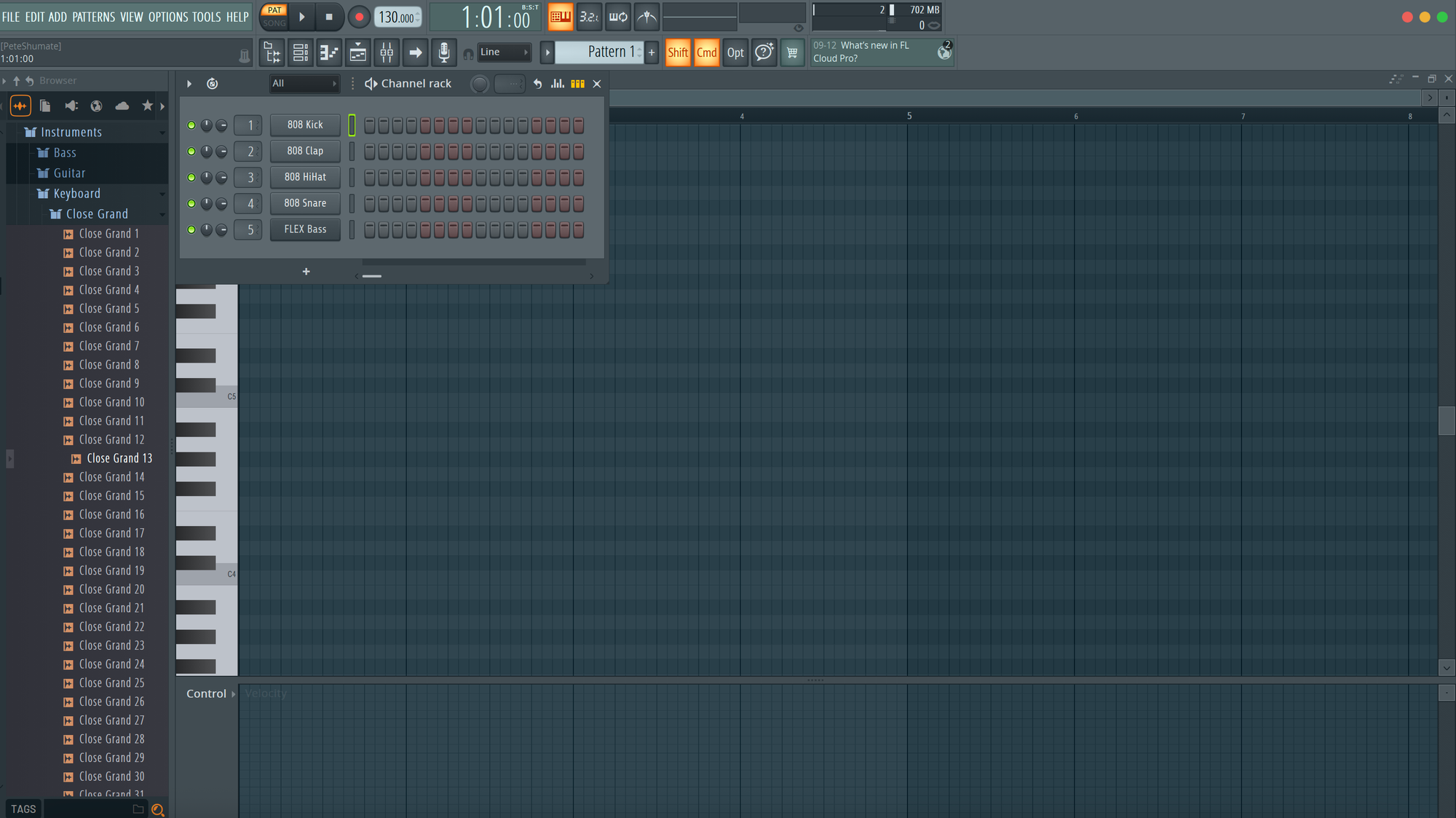
I wouldn’t have expected my music experience from twenty-eight years ago to help me that much, but it was completely useless. I recognized piano keys and that was it. I couldn’t remember any music theory because I never learned it. So, I needed:
- A crash course on music theory
- A tutorial (or five) on using FL Studio
I found The Complete Book of Scales, Chords, Arpeggios & Cadences, a book that contains basic music theory (outside of modes like Mixolydian and Dorian) and references for scales. I began reading. I’d read five or so pages, take a ten-minute break, and write down what I’d learned. I’ve been doing that for a few days, and I’ve learned the differences between major and minor scales, tetrachords and triads, and arpeggios. It’s not a lot at this point, but it gives me a foundation to begin diving into FL Studio.
What I Want for JBtH
Just Beneath the Holler is, at its core, a story about Appalachia and its people, history, and folklore. I want to make a soundtrack that has heavy bluegrass, Celtic, and gospel influences with some electronica and heavy metal thrown in. All of these are thematically important; I just need to learn:
- How to blend them seamlessly
- How to actually write music in the first place
That’s just two things!
Alongside FL Studio, I’m working on a comparison table of bluegrass, Celtic, and gospel music. What time signatures do they have in common? What scales/modes/chord progressions? What themes? Finding the common ground between them will help me blend their styles as long as I take care to keep some part of the original identity of those styles. I still don’t know how to do that, but I know more about music and music theory today than I did two days ago.
I wonder how much more I’ll know two days from now.