Sunday Show Out - 2/1/2026

Being iced into the house for most of the week is certainly a boon to productivity, and I made the most of that time to make solid progress on Just Beneath the Holler’s prototype. My objectives for this week were simple, though not easy: make a new tileset, use that tileset to make a new map for the Place Just Beneath, and implement the infinite-scrolling code I’d written into that new world. I completed every one of those objectives, but only with the time afforded to me by a frozen week off school.
And, even then, it’s not great, but it exists and can be refined.
What did I do?
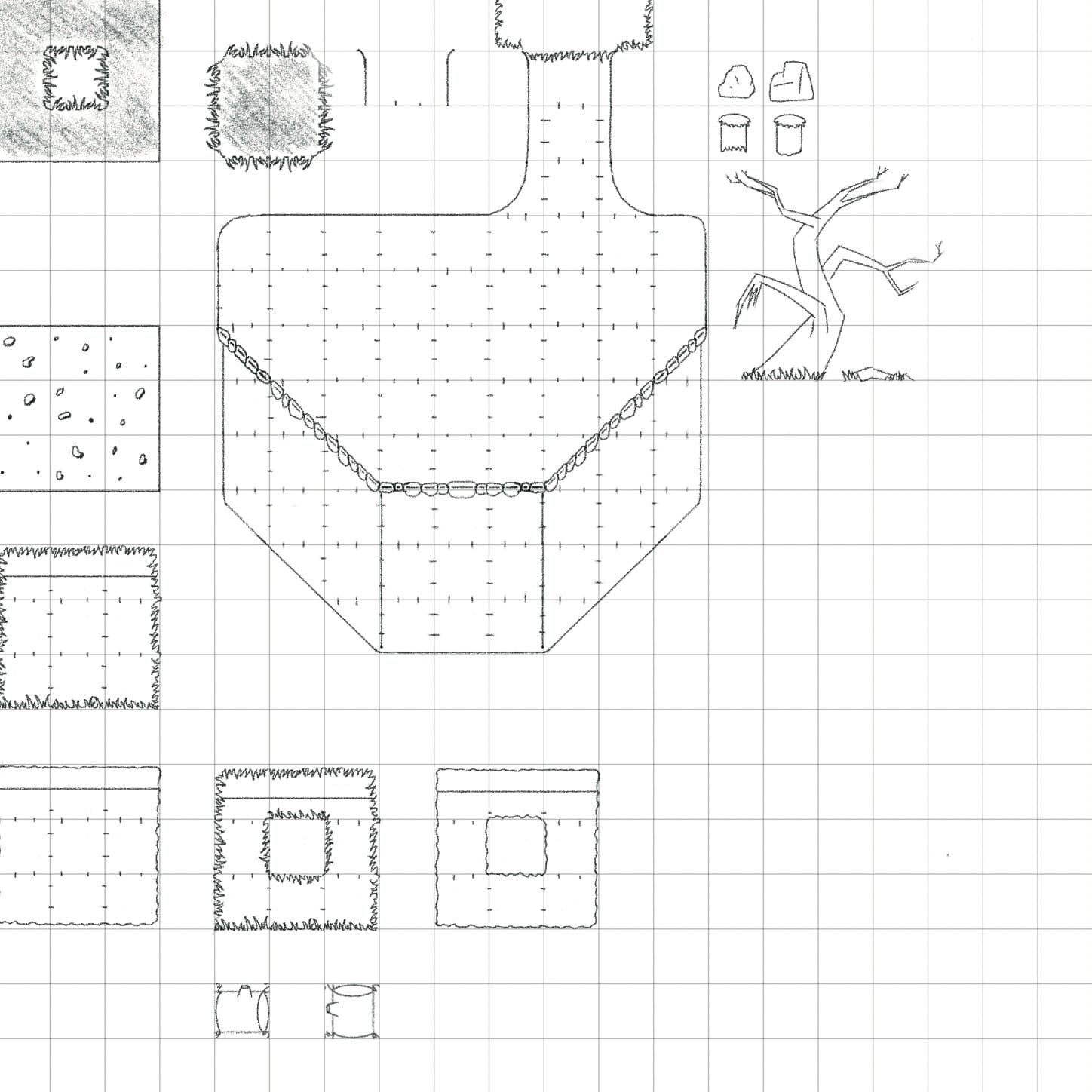
I started with a sketch of what I’d hoped would be the complete tileset for JBtH’s prototype. I thought about landforms the Place Just Beneath should have and drew those tiles along with tiles for the boundaries between those. A few hours of later, I had a visual list of the tiles I needed:
I then imported that sketch to its own layer in new Aseprite (hint, convert the native Aseprite file to RGB color instead of indexed color or the sketch will import poorly) and used that layer to lay down pixels until I had something that resembled a complete tileset. My time spent refining the color palette paid off, as the tileset looked really good for a first attempt.
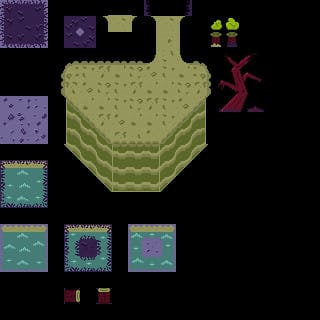
(Interesting aside: The rounded corners were made by shaving off eight, then five, then three pixels. Three, five, and eight are fifth, sixth, and seventh numbers in the Fibonacci sequence. I don’t know if there’s a correlation between the Fibonacci sequence and aesthetic corners, but I also don’t know if there’s not.)
Now that I had a shiny new tileset to play with, I could build a larger version of the Place Just Beneath. I decided on a square map made of 192 tiles on a side. With 16x16 tiles, that comes out to a 3,072x3,072 (pixel) map. That’s 36,864 tiles, or 9,437,184 pixels.
Remember how the Fibonacci sequence was a neat, almost comforting, bit of math that I noticed? This was the opposite. How was I going to place over nine million pixels? Even if I went by tile count, that felt like a Sisyphean task.
I’ve trained myself to step back in stressful situations and take an objective look. It’s not always successful, but it never fails to make me feel more grounded. As I thought about those numbers, I realized that I didn’t have to paint each tile, let alone each pixel, by hand. I was making landforms, and landforms are based on patterns. It’s the difference between painting with brush strokes vs. pointillism. I could do brush strokes. It’d take a while, but nowhere near as long as I’d first feared.
I imported my new tilemap, set collision layers on the necessary tiles, and began painting a new Place Just Beneath. It took three days, but I finished it. As I painted my new world, I discovered that I’d not accounted for every necessary tile. The urge to stop, create that tile, and continue was strong, but I knew that would just waste time and energy. Instead, I created a list of tiles I’d need to create as I went along. Some examples of tiles I’ll need to create:
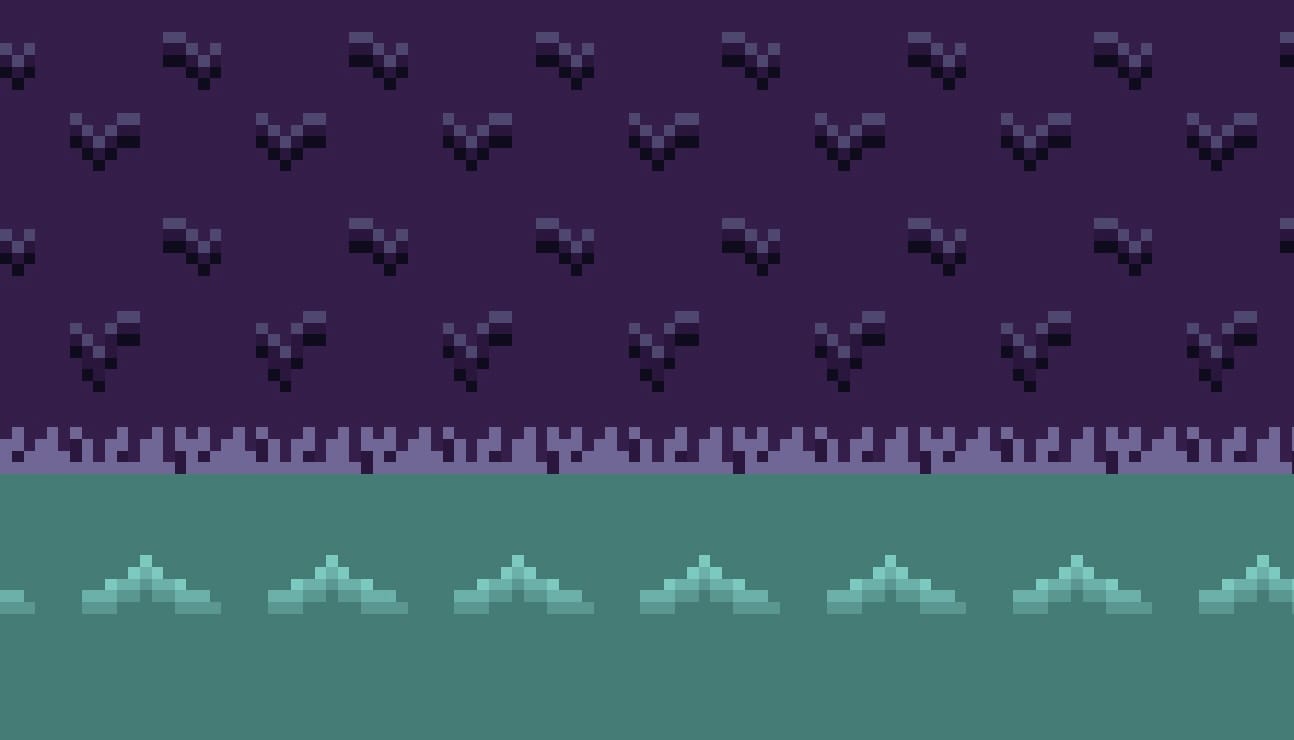
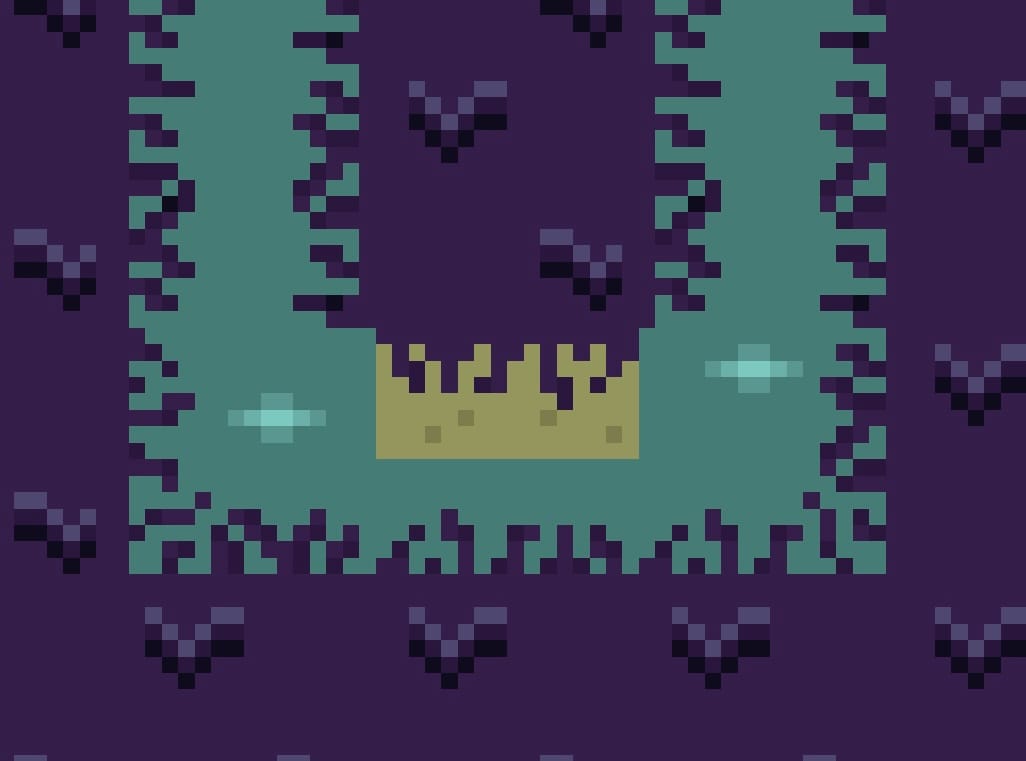
That’s really not many, and I’m proud of what I’d accomplished on my first attempt at making an actual game world. It was good enough in the moment to create this, the current Place Just Beneath:
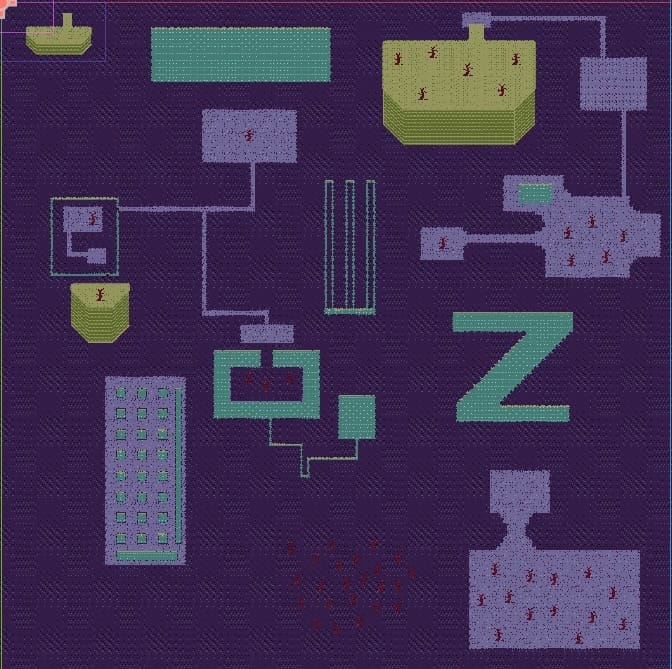
It’s not without its problems, but it’s also complete. I added repeating tiles on all four sides, implemented my infinite-scrolling code, and tested it. It worked.
I mean, it actually worked.
I had a convincing, infinite world that could be mistaken for a confused fever dream.
Huh. I did it.
What did I learn?
While this wasn’t new knowledge, I was for the repeated lesson of “log the mistakes and move on”. I’m getting better and relegating issues to a to-do list that I can come back to when the task is finished. My time is precious, especially with school starting back next week, and training myself to just let things go, even temporarily, frees my mind and my time to get the big jobs done.
The Place Just Beneath is a world, but it doesn’t feel like it, yet. The landforms are put together in slapdash fashion with no regards to actual geography. I need to study game worlds, specifically those of top-down action games and RPGs. There are a variety of Hyrules to research, for instance. And of course, there’s the real world itself. What does our world look like? How is it arranged? Why is it arranged that way? For goodness’ sake, I taught plate tectonics for ten years, I can at least learn to apply it.
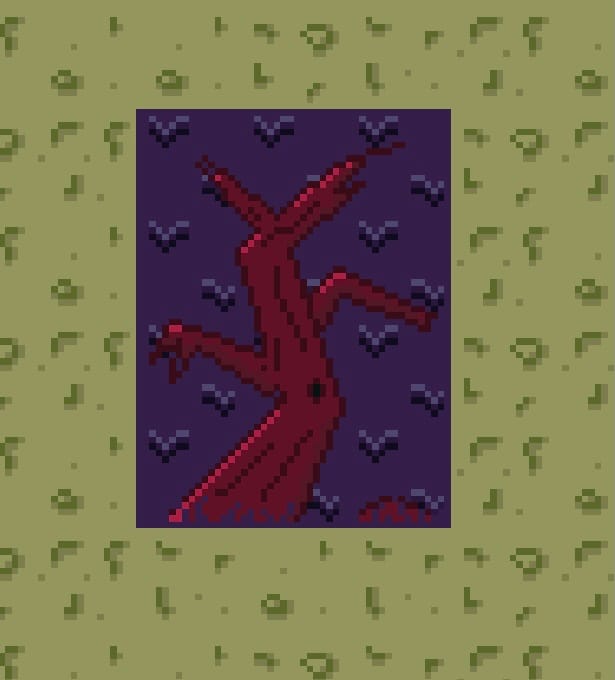
In terms of technical knowledge, I learned how to apply layers when creating a world. I couldn’t just set a tree down on a plateau, for example, or the tree tiles’ transparency would erase the underlying plateau tile. I had to create a new layer for trees of end up with this:
And, while I haven’t used them yet, I learned about Z-indices and Y-sorting, which allow for neat things like Zel walking behind or in front of trees. That’s another item on the to-do list.
What’s next?
I must once again be conservative when deciding on my weekly objectives. I have a world, but it’s empty. Zel’s currently wandering the Place Just Beneath alone and full of equal parts boredom, fear, and unease. She needs things to do, posts to grapple and enemies to kill. If I can give her those things next week, I’ll feel like I’ve kept my momentum. You should subscribe to the newsletter to see how that goes.
Thanks again for joining me on this journey!